
Clinical depression - major

Clinical depression
Also called: Major depression
A mental health disorder characterised by persistently depressed mood or loss of interest in activities, causing significant impairment in daily life.

Treatable by a medical professional
Medium-term: resolves within months
Requires a medical diagnosis
Lab tests or imaging rarely required
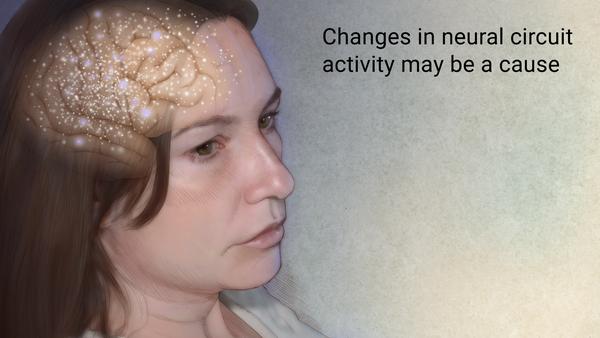
Possible causes include a combination of biological, psychological and social sources of distress. Increasingly, research suggests that these factors may cause changes in brain function, including altered activity of certain neural circuits in the brain.
The persistent feeling of sadness or loss of interest that characterises major depression can lead to a range of behavioural and physical symptoms. These may include changes in sleep, appetite, energy level, concentration, daily behaviour or self-esteem. Depression can also be associated with thoughts of suicide.
The mainstay of treatment is usually medication, talk therapy or a combination of the two. Increasingly, research suggests that these treatments may normalise brain changes associated with depression. 
If we can save one life each looking for the signs is great. Reaching out getting help. There are so many things we can do to help. Cancer patients minds confused hope they avoid this. 
#depression #life #save #iamstillawoman 

Comments

Popular posts from this blog

"Hard nipples" - areola or nipple skin

Someone once wrote"... when i get really cold, or get goosebumbs all over my body, the whole things really scrunch up, like, my entire areola scrunches itself up into a wrinkled little mound. it looks really weird and ugly, and i haven't ever seen other people's breasts do it. what is wrong with my areola/nipples??" The answer: Well nothing is wrong. This is what my areola does too. It's a normal reaction to the coldness or to irritation / stimulation. The little muscles in the areola do a similar goosebump thing as your other skin can do. People often call this phenomenon "hard nipples". Also note that skin on areola has less feeling or sensation to it than other areas of your body. If the areola was very sensitive, then breastfeeding would probably be quite uncomfortable because the baby pulls and tugs it! The nipples are sensitive but the sensitivity changes with hormonal changes, such as occur at mestrual cycle or pregnancy. Also this v...

Mastectomy Drain Breast Cancer Treatment

The  purpose of drains after mastectomy  is to drain away the fluid that can gather in the armpit region or around the scar on the chest wall. Some people after mastectomy also find that fluid gathers around the shoulder blade area on their back - this seems more common if the muscle from the back has been used for  breast reconstruction  at the time the mastectomy was done. When mastectomy is done - and especially if the lymph nodes are removed from the axilla or armpit - then there is a lot of tissue fluid and lymph fluid left with no where to go. This fluid normally flows through the lymph channels but if they are cut then it can escape into the normal skin and muscle tissues. Your surgeon will place drains under your skin after mastectomy. These drains gather up the fluid and remove it to a bottle (or bottles) that you carry around with you. Some people use a  belt clip to attach the drain  to their waistband - making them more mobile. Others car...

Pancreatic Cancer breakthrough

Published Today By  Ana Sandoiu Fact checked  by Jasmin Collier New research now published in the  Journal of Natural Products  shows that a vine compound is highly effective in the fight against treatment-resistant pancreatic cancer cells. #cancer #cells #pancreaticcancer #breakthrough #natural #journalofnaruralproducts #cure #survivor #iamstillawoman #Anasandiou #jasmincollier A type of rainforest vine may hold the key to effective cancer treatments.  Pancreatic cancer  is notoriously difficult to treat, and the condition has a poor outlook. According to the American Cancer Society (ACS), the 5-year survival rate for people with early-stage exocrine pancreatic cancer is  12–14 percent . A  new study  explains why that is and offers a potential solution. Gerhard Bringmann, a professor of organic chemistry at the Julius-Maximilians-Universität Würzburg in Germany.  Specifically, human pancreatic ...